The Bled Strategic Forum is an opportunity for exchanging opinions between those who create policies and those who monitor policy proposals, evaluate them, and suggest improvements, as well as for the wider public. The discussions covered the current state of democracy in the world, with a focus on Europe, human rights, international relations, and the dominant topic was the war in Ukraine and its consequences. Some of these consequences are already being experienced, while others can only be discussed in abstract terms. The question of the world’s structure after the pandemic and after the end of the war was also raised. There were talks about the current economic situation both in the European Union and globally.
In the panel with participants including Mark Bowman from the European Bank for Reconstruction and Development, Katja Lautar from the Slovenian Ministry of Finance, Valerio De Luca, President of the International Academy for Economic and Social Development from Italy, Paul Tang, a European Parliament representative dealing with taxation, and Boštjan Vasle, Governor of the Bank of Slovenia, it was concluded that we are going through difficult economic times and that this year will only show its worst face.
The beginning of the year was very positive. Economies began to recover from the effects of the coronavirus pandemic, new jobs were being created, and countries started reaching growth rates similar to those before the pandemic. However, on February 24, the unexpected happened – the aggression that shook the recovering world.
The year now shows a second face: growth rates are slowing, but we are still riding on the momentum from the beginning, which is gradually fading and preparing us for a new face, whose appearance we cannot predict. The only certainty is that it will be worse than the previous two. We will face high energy prices, rising inflation, which is already here and will continue next year, as well as gas shortages.
Panelists estimate that inflation will be very high in the coming quarters and that its gradual slowing, and eventual decline, can be expected only at the end of next year. No one was optimistic about the end of the current year, and everyone expects a negative outcome. The only question is how severe it will be and how big the decline will be. The size of the decline depends on the energy market and private consumption.
Jerome Powell in the United States announced preparations for a period full of sweat, blood, and tears. The situation in Europe will not be better, and how it manages the coming crisis will determine Europe’s position in the future. It is clear what kind of winter lies ahead, and that it will not be easy anywhere. The European Union is preparing, and there are announcements about the severity of the upcoming period, focusing on possible energy shortages and the crisis in this market.
It is already clear that the main topic was the energy sector, especially the situation in Europe, which depends on Russian energy. The open questions concern investments in this sector, regarding growth in efficiency and cleaner, renewable, and green energy sources.
The clear message is that whoever has the means should invest in the energy sector. The role of the European Union in the future world depends precisely on the current way of managing the crisis in the energy sector, which is one of the forum’s conclusions.
Europe currently needs fast and efficient solutions in this regard. One proposed solution is limiting the gas price. This is only a short-term solution, where the state will have to cover the difference between the market gas price and the capped price. The duration of this measure depends on the available state budgets. Therefore, an active role of the state in the market is expected in the future. The consequences of such policies remain to be seen. The risk of the energy price cap measure is that it could result in increased demand.
Besides the energy market, the issue of the chip market also emerged. Europe is fully dependent on foreign countries, mainly Taiwan, for chip supply. We have already faced a crisis of chip shortages and rising technology prices, which resulted from supply chain problems during the pandemic. The plan is to reduce dependence on other countries by developing adequate infrastructure for chip production on the continent. This is a long-term and capital-intensive process, as much as reducing energy dependence.
Representatives of Siemens, Porsche, Interzero, and Heliot spoke about sustainable business models, digital and green transformation, and operating in times of crisis. The main question that troubles large companies operating in the region, Europe, and globally is how to adapt to social changes while maintaining the old values on which the whole system is based.
They try to keep their market recognition, retain old customers, and attract new ones. How to combine the new and the old so that everything is sustainable. The main challenge they face is sustainability. When we talk about sustainability, we usually mean reducing the effects of climate change.
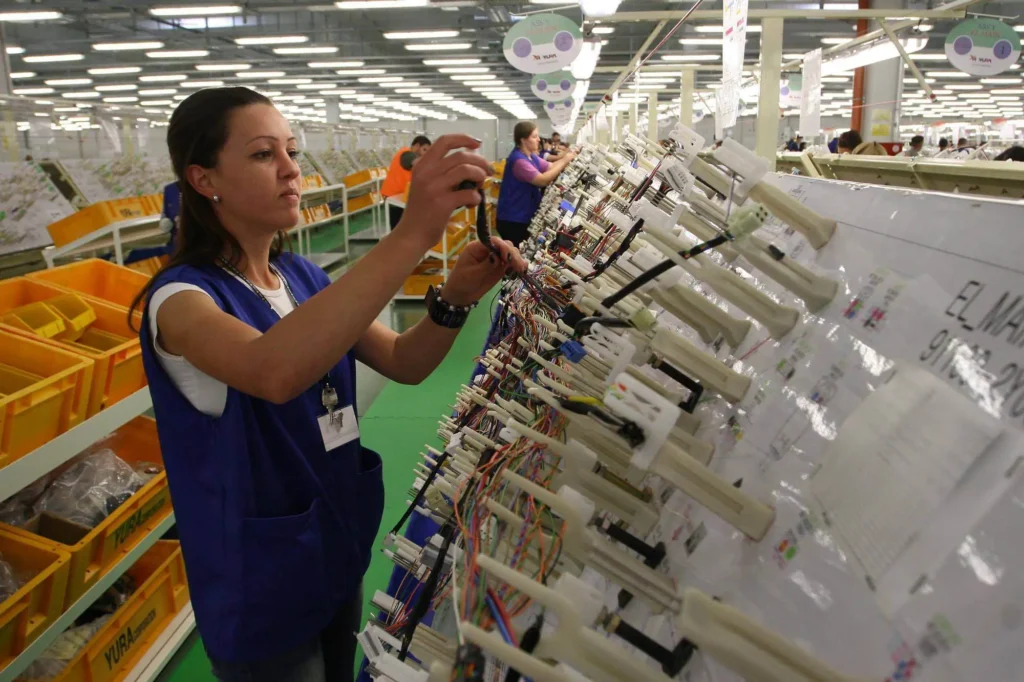
Most large companies operating in multiple European countries have addressed these issues by introducing green policies into their operations. Until now, green policies for some companies meant planting trees, cleaning parks and public spaces, buying recycled paper, but this is only a grain of sand in the desert. Considering the current state of nature and energy supply issues, which all European economies suddenly faced this year, a more serious approach to green policies is necessary, both by companies and the public sector.
The entire production process needs to be reorganized to be sustainable, consume less energy, and become circular. One company cannot achieve sustainability alone; the participation of all stakeholders, especially the public sector, is necessary. Companies expect governments to be more active in this process, which could include tax incentives, setting short-term and long-term sustainability goals, and approving grants for transforming companies.
The entire production process needs to be reorganized to be sustainable, consume less energy, and become circular.
Besides financial and regulatory incentives, it is important for companies that the public sector understands the importance of data in the transformation process. Today, having accurate and timely information and data is crucial for making the right business decisions. Digitalization has allowed companies to measure the effects of their operations and have real-time data. However, they cannot create large data sets on their own for decision-making. It is important that digitalization penetrates all levels of society because it facilitates business for the public and private sectors, as well as daily life for citizens. Of course, digitalization also has negative effects, which need to be considered and minimized as much as possible.
Companies operating in multiple countries also face challenges from inconsistent environmental standards. The EU has allowed member states to set their own CO2 emission limits as long as they respect the minimum set by the European Commission.
This has resulted in different laws and regulations, forcing companies to organize operations differently in different countries. They also often face criticism from the public. Therefore, companies expect the public sector to involve them in decision-making from now on. Companies are ready to take a more active role in preserving and protecting the environment. It is important for everyone to understand that there is no waste, that one person’s waste can be another’s resource, and that they can connect to create a supply chain, producers, and consumers without waste. This is also important for achieving the goal of reducing energy and technological dependence on other continents.

The lack of good and quality diplomacy in the European Union has led to some resources in Africa being taken over by Russia, China, and other Asian countries. This sends another message to European officials: the EU’s foreign policy approach needs to change.
The tone of institutional representatives and private sector participants was not positive. Difficult times are inevitable, but it is important to prepare well for them. Investments in sustainable and green energy sources are one way to ensure Europe’s good position in the world in the long term. However, short-term sacrifices are necessary because there is no easy or fast path to solving the challenges and problems that Europe and the world currently face.
Author: Marija Suzić, researcher