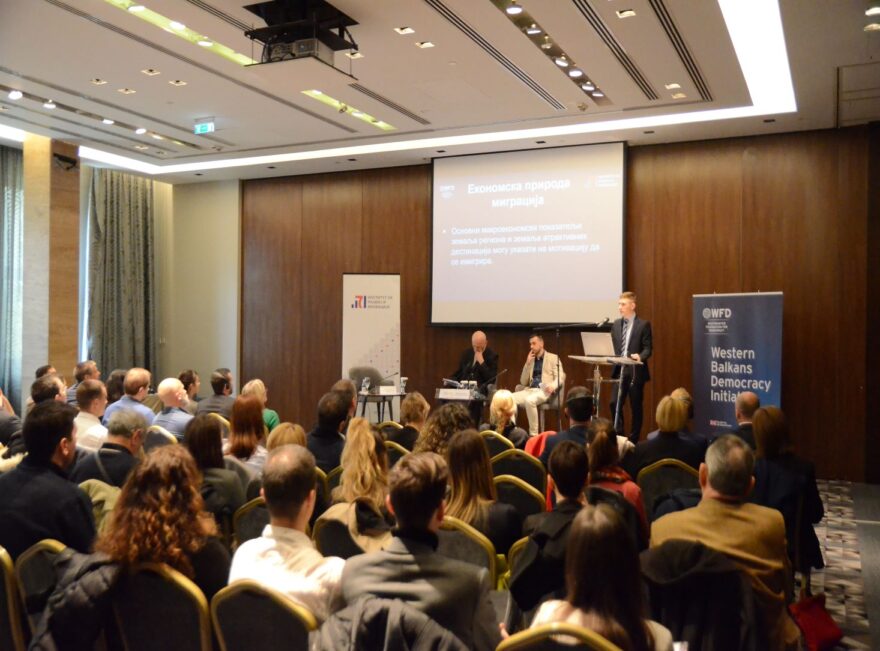
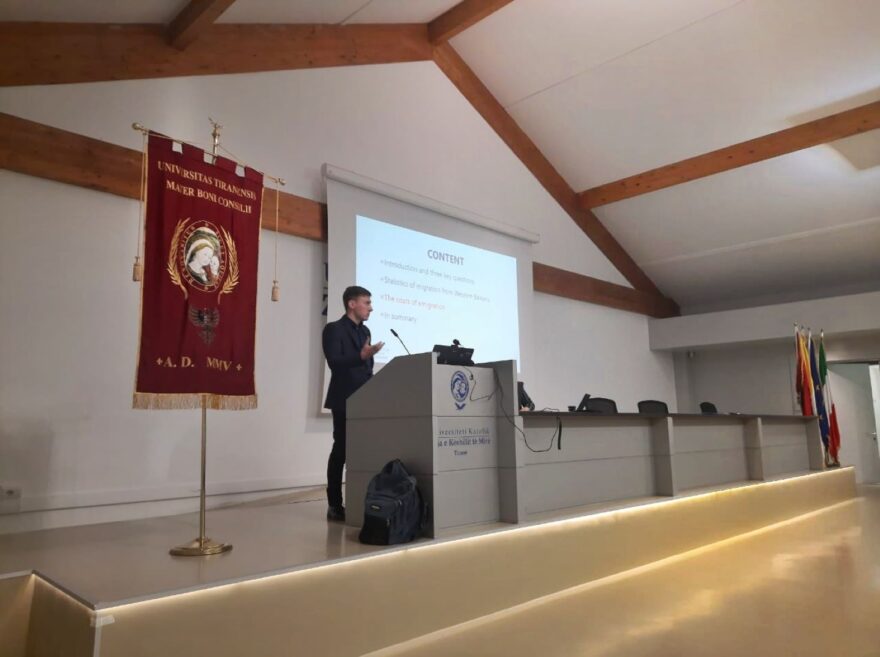
The Institute for Development and Innovation is implementing the project and research study “The Costs of Youth Emigration” with the support of the Westminster Foundation for Democracy (WFD). The research was conducted from January to March 2019. Advocacy activities were planned to continue over the following several years, until the publication of the 2021 Census data. Addendum: Following amendments to the Law on the Census of Population, the Census was definitively postponed to October 2022.
The Republic of Serbia is experiencing a trend of population ageing and a decline in the total population. This trend is driven by the combined effects of negative natural population growth and intensified emigration flows. The Statistical Office of the Republic of Serbia (SORS) does not have data on the scale and characteristics of emigration. In addition, there is no organisation, either in Serbia or abroad, that maintains accurate records of migrants from Serbia. Therefore, it is not possible to determine with certainty the age or educational structure of emigrants.
The aim of the “The Costs of Youth Emigration” project and analysis is to provide the most accurate possible answer to the research question of how much society loses when a young person leaves the country. The project examines the economic effects of emigration on Serbia as a country of origin, with a particular focus on youth emigration.
It explores both the positive and negative implications of emigration and assesses the potential gains and losses for the Serbian economy and society. The analysis highlights the need for further research and economic policy measures aimed at mitigating the consequences of youth emigration from Serbia.

The “The Costs of Youth Emigration” analysis seeks to answer three key questions:
- What is the average cost of educating a highly educated individual?
- What is the opportunity cost in terms of potential GDP growth generated by annual population emigration?
- What are the positive effects of emigration flows on the Serbian economy, and what is their scale?
The analysis will use data from international institutions, including the OECD, the United Nations and Eurostat, as well as data from official institutions of the Republic of Serbia. The researchers will undertake this research with an awareness of the limitations in data availability, as well as the limitations of the selected methodology in capturing all the positive and negative effects of youth emigration.
The objective of the Institute for Development and Innovation is to use the “The Costs of Youth Emigration” analysis to quantify, for the first time, the economic effects of young people leaving Serbia.
The results of the analysis will be presented to decision-makers, the public, the media and other key stakeholders, with the aim of developing economic policies that would contribute to managing migration processes and mitigating the costs of youth emigration.
The role of the Institute for Development and Innovation is to conduct the analysis of the costs of youth emigration, collect and process available data, assess the impact on the working-age population, and develop recommendations for decision-makers aimed at reducing the negative effects of emigration processes.
The objective of the Institute for Development and Innovation is to use the “The Costs of Youth Emigration” analysis to quantify, for the first time, the economic effects of young people leaving Serbia. The analysis also aims to open a broader debate on the number of emigrants from the Republic of Serbia and to prepare for the results of the Census, which will provide more precise data on the number of people leaving Serbia.