Rural development initiatives often face the challenge of translating various ideas and concepts into tangible outcomes that genuinely benefit rural communities.
This is the reason why the RURALITIES project partners always keep their focus on bridging gaps between conceptual planning and practical application while working on the shared mission to establish functional training centres in the field of rural innovation across Europe and Africa.
Therefore, it is crucial to continuously evaluate the project’s impact and know the answers to certain questions
On the other hand, RURALITIES conducts activities in more than 40 specific locations, so it can be quite challenging to align them and ensure their effectiveness. Are the activities achieving the project goals? Are they truly providing targeted benefits to participants? What are the weak points in the implementation? What can partners do to improve the effectiveness of project activities?
Measuring Impact in Rural Communities
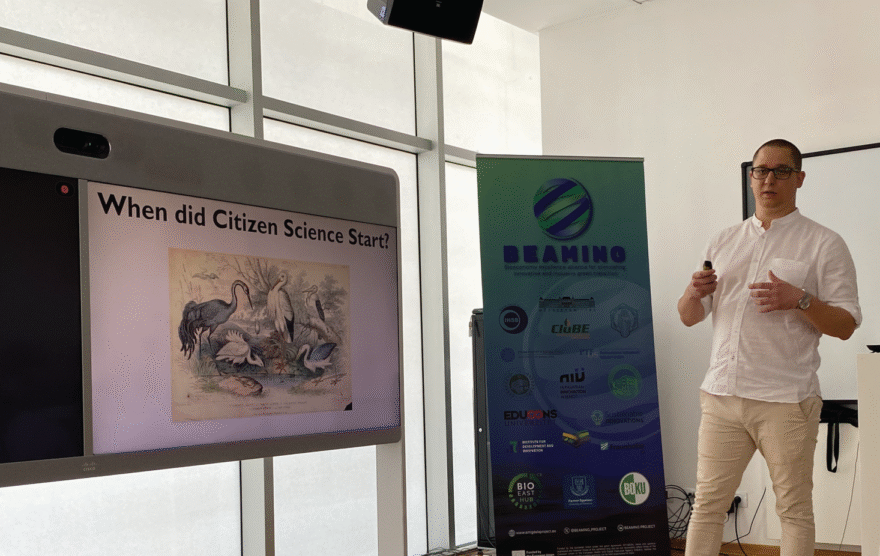
At the 6th RURALITIES Consortium Meeting in Aarhus, Denmark, the Institute for Development and Innovation presented a recently developed RURALITIES citizen sensing system, which tackles the above-mentioned questions by gathering feedback directly from the local participants.
After each measurement, project partners and local actors receive a variety of useful information and actionable recommendations, which enable them to detect issues early and adjust and improve their activities during the course of the project to achieve a bigger impact on local communities.

Practical Implementation of Rural Innovations
The meeting in Aarhus also tackled the upcoming policy briefs designed to align project insights and real and legitimate needs and challenges of local rural communities. RURALITIES policy briefs will inform and guide decision-makers in targeted areas by outlining pertinent challenges and formulating evidence-based recommendations.
In the process of developing these policy briefs, RURALITIES is liaising with the sister project ESIRA (Enhancing Social Innovation in Rural Areas) to exchange insights through participating in its 1st policy webinar on 29th of April 2025. ESIRA partners will facilitate discussions on relevant topics for co-creating solutions for the sustainable development of rural communities.
RURALITIES and ESIRA are funded by the European Commission through the Horizon Europe programme.