As climate change increases the frequency and destructiveness of wildfires around the world, the losses are not only material, they deeply affect natural resources, communities, and the economy. This is what David Freshwater, a professor at the University of Kentucky, writes and warns about in his author’s text.
In line with this, a two-day meeting of RES2FIRE project partners was held in Banja Luka, aimed at enhancing resilience to climate change, as well as to natural and man-made disasters in the Adriatic-Ionian region.
Between Science and Practice: How to Build Systemic Wildfire Resilience in an Age of Climate Uncertainty
A conference entitled “Enhancing wildfire protection” was held on 6 May 2025, organised by the Institute for Protection and Ecology of the Republic of Srpska (IPERS) and the Kozara National Park. The event brought together experts, project partners, and institutional representatives from the region.
The conference highlighted the need for improved digitalisation and the use of technologies such as drones, cameras, and webGIS systems in wildfire protection. It was emphasised that fires are more frequent in areas with fewer firefighters and poor infrastructure.

Priority is given to remediation rather than prevention, while climate change calls for new approaches and on-site adaptation. All conference participants agreed that, due to the increasingly evident consequences of climate change, a systemic response in the countries of the region is crucial, along with greater harmonisation of actions to reduce wildfire risk and to ensure that interventions in the field are as effective as possible with minimal losses.
Steering committee meeting of the RES2FIRE
As part of the conference, a technical meeting and a steering committee meeting of the RES2FIRE project were held, during which partners thoroughly analysed the activities carried out to date and agreed on the next steps in the implementation of project tasks. RES2FIRE project is part of the Interreg IPA ADRION 2021–2027 programme, co-financed by the European Union.
Remediation is given priority over prevention, while climate change requires new approaches and on-site adjustments.
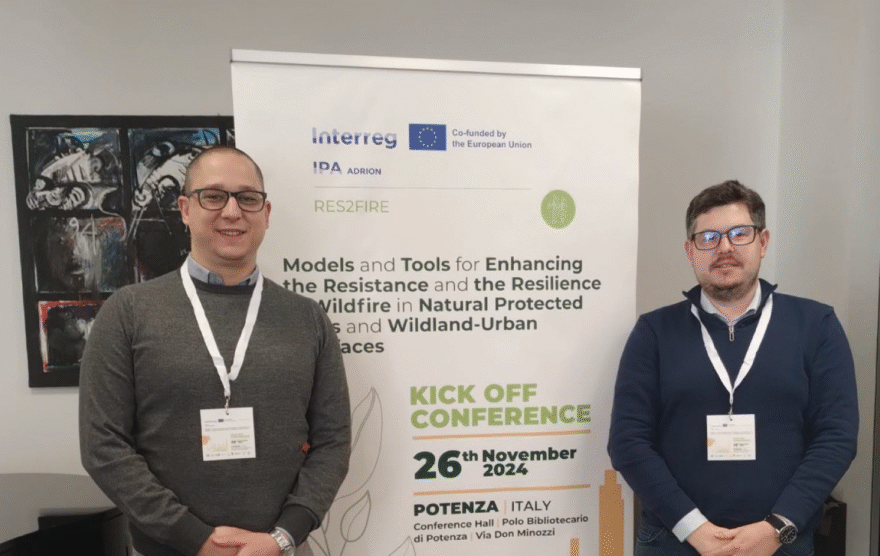
Representing the Institute for Development and Innovation at the meetings were programme manager Siniša Borota and project manager Stefan Karajanković. The programme also included a study visit to the Kozara National Park, one of the project’s pilot sites, where participants had the opportunity to learn about protection measures implemented on the field.
The Institute for Development and Innovation, as the key partner in Serbia, will play a central role in the implementation of project activities at the national level. A particular focus of the Institute will be the development of a detailed analysis of the environmental and socio-economic damage caused by wildfires.