Regenerative agriculture is a systemic approach to land management that seeks to improve the resilience and sustainability of the agricultural sector. By focusing on key principles like increasing soil organic matter, enhancing biodiversity, and improving water cycles, regenerative agricultural practices can improve soil health. The result is a more fertile, productive and resilient soil (e.g., drought resilient) which brings the financial benefits and economic stability for farmers while preserving its vitality for future generations.
Today, in the Republic of Serbia, regenerative practices are mostly being implemented in the areas of Vojvodina, while their adoption in other parts of the country remains limited. Regional disparity in this context is also characterized by other differences, such as the ones related to the distribution of the arable land, dominant agricultural branches and soil types. Despite these differences, the potential social and individual benefits of particular regenerative practices in the other parts of Serbia are undeniable, and some might be even more applicable. However, there is no such thing as a universal regenerative model, as finding out the local context and specific needs, challenges and opportunities of farmers is crucial in choosing and adapting the right regenerative practices.
Can regenerative agriculture practices take hold in Southern Serbia?
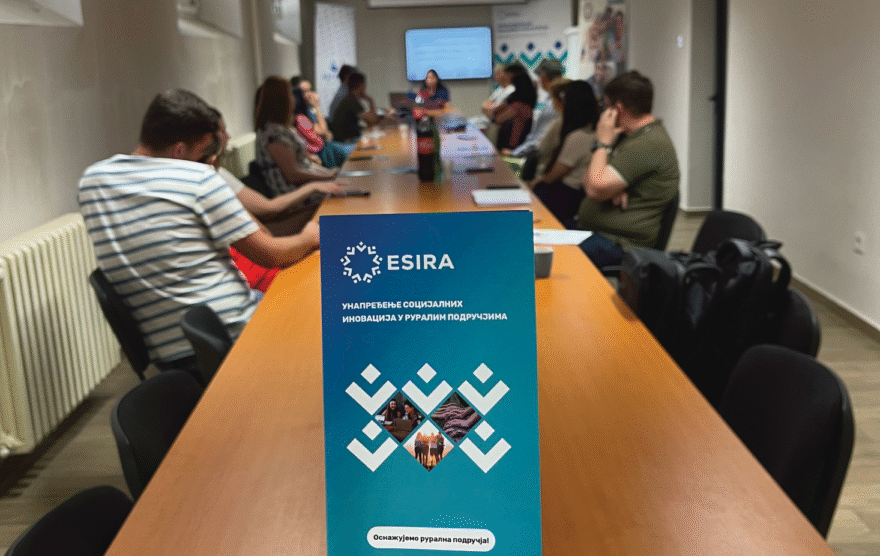
The Institute for Development and Innovation, together with the Regenerative Agriculture Alliance of Serbia and the Centre for the Development of Jablanica and Pcinja Districts, organized an interactive panel discussion in the city of Leskovac.
The goal was to engage local farmers and other relevant stakeholders in a dialogue which brings us one step closer to the larger-scale transition from conventional farming to a regenerative system that benefits all, the environment, the agricultural sector as such, the individual farmers and the consumers.

The event was organized as part of the ESIRA project, within which regenerative agriculture is recognized as a significant socio-economic initiative for improving the living conditions of marginalized social groups in Jablanica and Pcinja districts.