Regional disparities in the Republic of Serbia represent a challenge for balanced economic development and the achievement of long-term sustainability. Data from the Statistical Office of the Republic of Serbia indicate that in 2024 there were significant regional differences, among which GDP per capita stands out. The GDP per capita in Belgrade is almost two and a half times higher than in Southern and Eastern Serbia. In addition, all regions except Belgrade are below the national average, which is characteristic of many socio-economic indicators in Serbia.
Limited access to education, along with restricted employment opportunities, leads to the outmigration of young people from rural areas, contributing to negative demographic trends and slowing down local development.
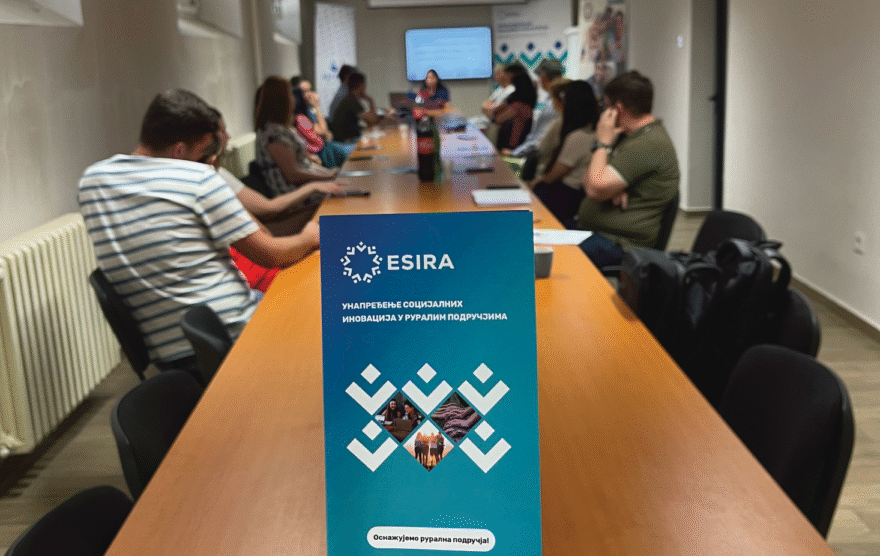
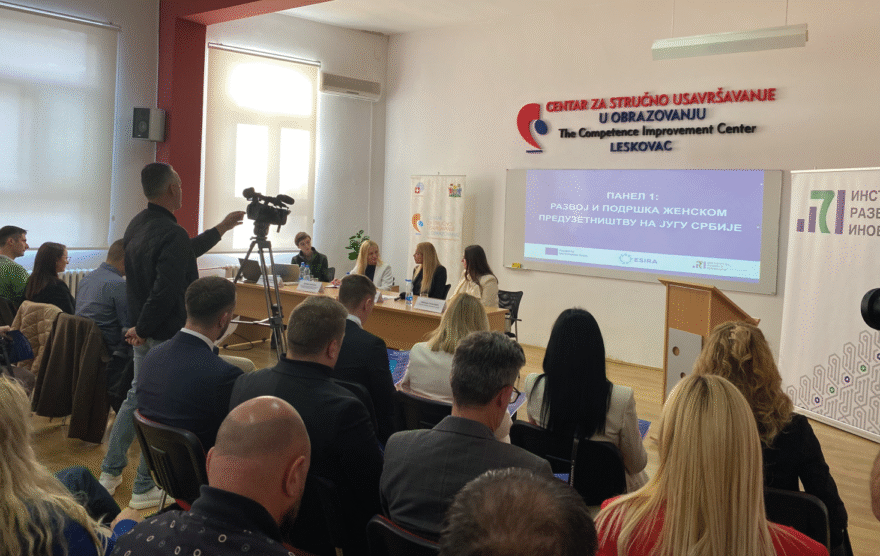
Through the ESIRA project, the Institute for Development and Innovation uses socio-economic initiatives as a means to strengthen the economic resilience of rural areas. Within these initiatives, young people and women in the Jablanica and Pčinja districts are recognized as key actors whose employment and entrepreneurial potential can stimulate the development of Southern and Eastern Serbia.
Exchange of Experiences among ESIRA Partners in Rural Poland
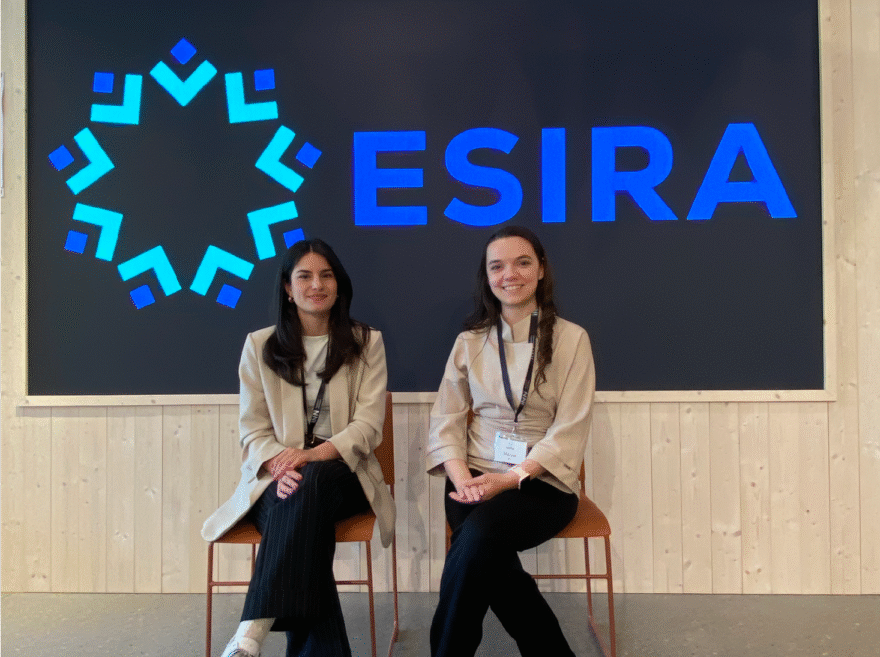
In the Polish Bieszczady Mountains, in the village of Orelec, the fourth ESIRA consortium meeting was held from October 15 to 17, 2025. The meeting gathered partners from eight European countries – Spain, Italy, Hungary, Serbia, Poland, France, Lithuania, and Norway – who met in a rural area of Poland to exchange results, ideas, and examples of good practices from their pilot regions. During the three-day program, partners presented progress within the work packages, participated in workshops on policies supporting the social economy, and discussed methodological approaches for the further implementation of the project.
A special emphasis was placed on field visits and learning about examples of socio-economic initiatives and social enterprises that have revitalized rural communities in this region.
The similarity with the situation in the region of Southern and Eastern Serbia lies in the fact that, in this rural part of Poland, women and young people are also recognized as one of the marginalized groups whose potential to activate local communities remains underutilized. Therefore, in this part of Europe as well, the focus is placed on socio-economic initiatives that continuously provide support to women and young people.
The ESIRA project is funded by the European Commission under the Horizon Europe programme.