At the regional level, the labor market situation has improved across all parts of Serbia. However, the northern regions are making greater strides in economic inclusion, while structural exclusion remains prevalent in the southern regions.
Data from the Republic Statistical Office show that female employment in the Region of Southern and Eastern Serbia is the lowest in the country – only 39.9%, compared to 51.7% in the Belgrade region.
These regional disparities in the labor market highlight the need for targeted regional economic policy measures – from incentives for women’s and youth entrepreneurship to strengthening the capacity of local communities to provide access to training, mentoring, and financial support. Without regionally tailored economic policy interventions, the risk of long-term social exclusion remains high.
Building a Sustainable Future in Southern Serbia
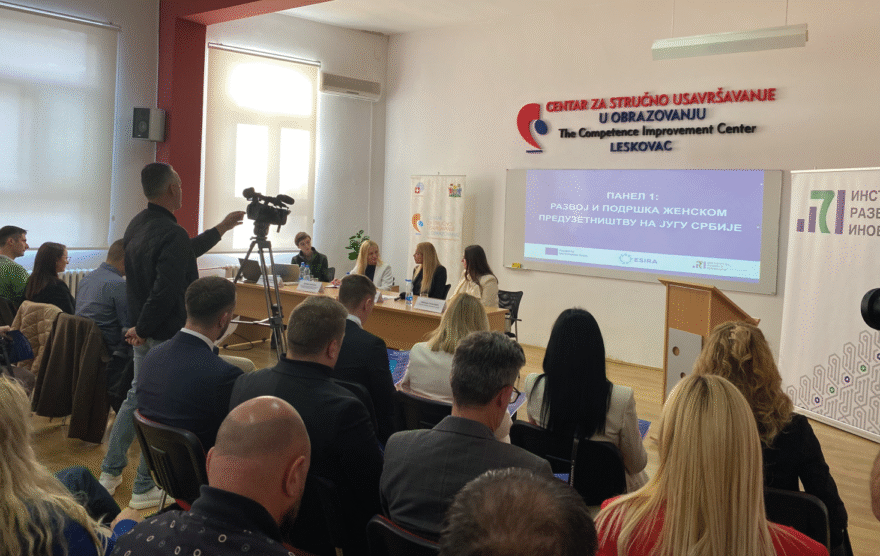
The Institute for Development and Innovation, through the ESIRA project (Enhancing Social Innovation in Rural Areas), is launching initiatives at the pilot location in the Jablanica and Pčinja districts aimed at improving the economic and social position of marginalized groups – women, young people in NEET status, and entrepreneurs.
The flagship initiative focuses on supporting young women in entrepreneurship through skills development and empowerment for employment and self-employment. In doing so, the Institute not only provides short-term support but also lays the foundation for long-term economic integration and the activation of human resources in less developed areas.

Sharing Practices to Strengthen Rural Communities in Europe
The third ESIRA consortium meeting was held in Kongsvinger, Norway, in the Innlandet region – one of the nine pilot sites of the ESIRA (Enhancing Social Innovation in Rural Areas) project – from 20 to 22 May 2025.Partners from eight European countries – Spain, Italy, Hungary, Serbia, Poland, France, Lithuania, and Norway – gathered at the Kongsvinger Science and Technology Park to present progress and exchange experiences from their respective pilot sites.
The program included presentations of work packages, discussions on project methodology, and interactive sessions dedicated to strengthening collaboration among partners. Participants also had the opportunity to meet members of the Norwegian pilot site and discuss the challenges faced in rural areas, as well as strategies for overcoming them.
The ESIRA project is funded by the European Commission through the Horizon Europe program.