Rural, mountain, and remote areas make up about 80% of the European Union’s territory. Around 30% of the population lives in these areas, and they generate 46% of the EU’s gross value added. They are also place to most of Europe’s natural resources and cultural heritage (European Commission). However, these areas face many challenges, including lower GDP per person, high unemployment, lower incomes, an ageing population, and limited access to goods and services.
In addition, recovery based on technology and innovation after the 2008–2009 financial crisis, the COVID-19 pandemic in 2020, and the effects of the war in Ukraine has often not reached rural communities. As a result, rural areas face a higher risk of poverty and social exclusion, with 22.4% of the population at risk. These challenges affect young people, older people, women, people with disabilities, and migrants the most..
In Serbia, rural areas cover more than 90% of the country’s territory, according to calculations based on the DEGURBA methodology and the 2025 research by Drobnjaković and Kokotović Kanazir. These areas face similar, and in some cases even greater, challenges than rural areas across the European Union.
Rural Development in Focus at the ESIRA Meeting in Lithuania
During the fifth consortium meeting of the ESIRA project, held from 20 to 22 May 2026 in Druskininkai, Lithuania, partners discussed challenges and solutions for eight rural areas across Europe where the project is being implemented. The meeting reviewed the project’s achievements so far, completed activities, and plans for the next period, with a special focus on rural development.
As part of the three-day programme, partners presented the progress of socio-economic initiatives developed within the project. In total, 57 initiatives have been created through more than two years of work on the ESIRA project.
A special part of the programme included field visits to established socio-economic initiatives and social enterprises in the Druskininkai region of Lithuania.
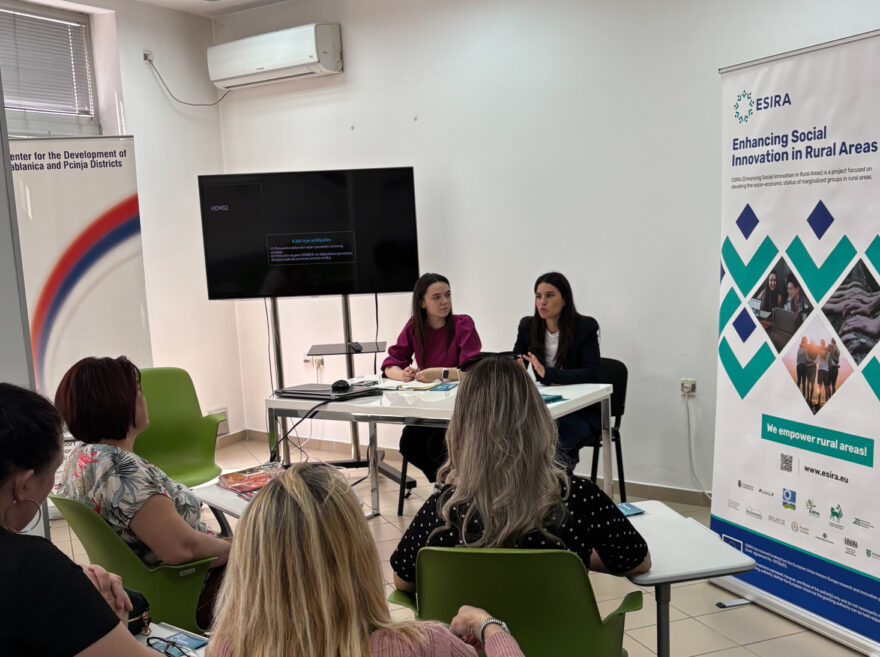
The knowledge and experience gained in Lithuania can support the development of the Jablanica and Pčinja districts, where the ESIRA project is being implemented. This is especially important as Southern and Eastern Serbia is the most rural region in the country.
The ESIRA project is funded by the European Commission through the Horizon Europe programme.