Every day discourse related to ecological topics is flooded with revolutionary discoveries of new technologies that promise ambitious results. Nonetheless, we rarely witness the practical implementation of these discoveries, especially on larger scales, which shows a lack of truly transformative results.
Essentially, there are no such things as sustainable cars or buildings, only sustainable or non-sustainable social systems might exist as such. Our relationships with each other (proprietary, exploitative, etc.) are reflected in our relationship with the environment.
Although technological development is an important part of the green transformation, efforts that promote technological solutions to individual elements of the environmental crisis in the current highly complex societal setting are missing the core issues. The green transformation is not just about swapping fossil fuels for renewables, it is about a fundamental restructuring of society to make it sustainable.
Therefore, things like power relations, human exploitation, decision-making mechanisms, and social inequalities have to be addressed when designing sustainable solutions if we want to avoid false solutions, greenwashing and other unwanted consequences that push us one step forward and two steps back.
Exchange of experiences on creating sustainable solutions in Ljubljana
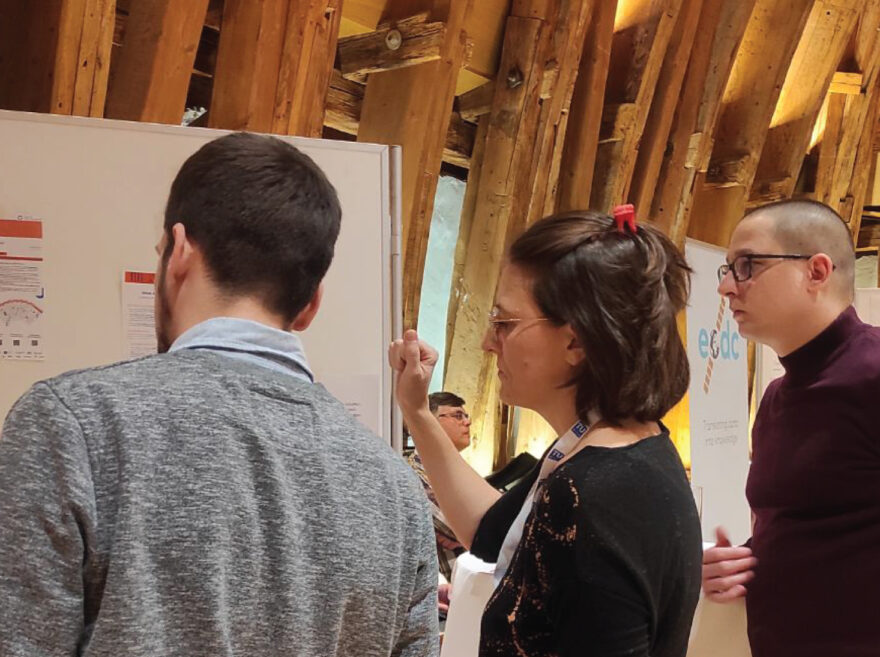
These are some of the topics discussed by the representative of the Institute and Programme Manager for Green and Digital Transformation, Siniša Borota, at the conference “Partnerships for Taking Policies Towards Green Actions” in Ljubljana.
This international conference, hosted by the Centre for Excellence in Finance, gathered experts, policymakers, and practitioners from the region, Europe and North America, to address global and cross-border problems, such as climate change, environmental degradation, biodiversity loss, and social inequality.

The Institute for Development and Innovation also had the opportunity to present the BEAMING project during the panel discussion “Co-creating Sustainable Solutions: Finding Synergies for Public-Private Partnerships”, with a focus on good practices in the field of bioeconomy, to a group of high-level representatives of international organizations, as well as ministries, central banks, and public institutions from across the Western Balkans and neighboring regions.