Wildfires represent a serious global problem, and the scale of their consequences is best illustrated through numbers. In the period from March 2024 to February 2025, wildfires around the world burned through 3.7 million square kilometres – an area larger than India. Some 100 million people worldwide were exposed to their impact, while the value of threatened property reached 215 billion dollars.
At the same time, 8 billion tonnes of CO2 were released into the atmosphere (State of Wildfires, 2025). Of all the alarming figures, the most concerning is the fact that humans are the cause of as many as 80 to 95 percent of wildfires. Addressing this problem requires a holistic approach and the synergy of all stakeholders – from institutions to local communities.
Title: The RES2FIRE Project – Towards Strengthening Ecosystem Resilience to Wildfires
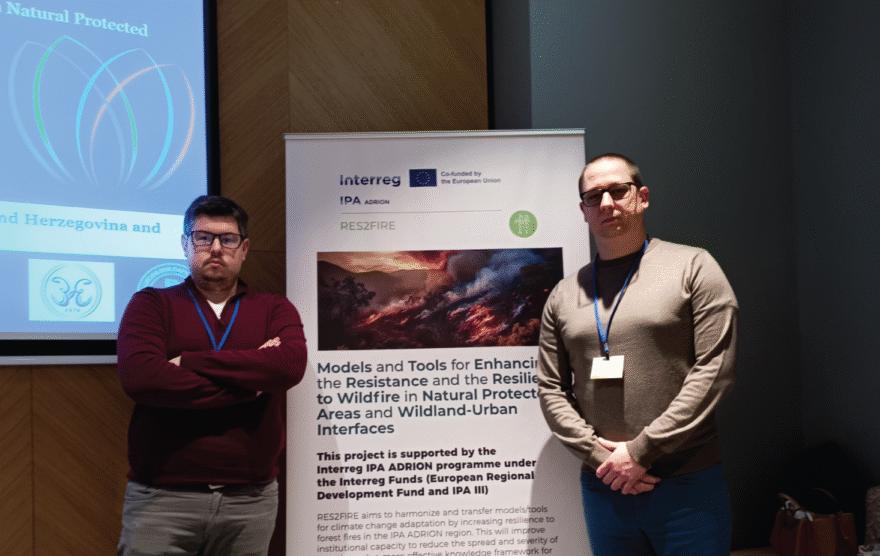
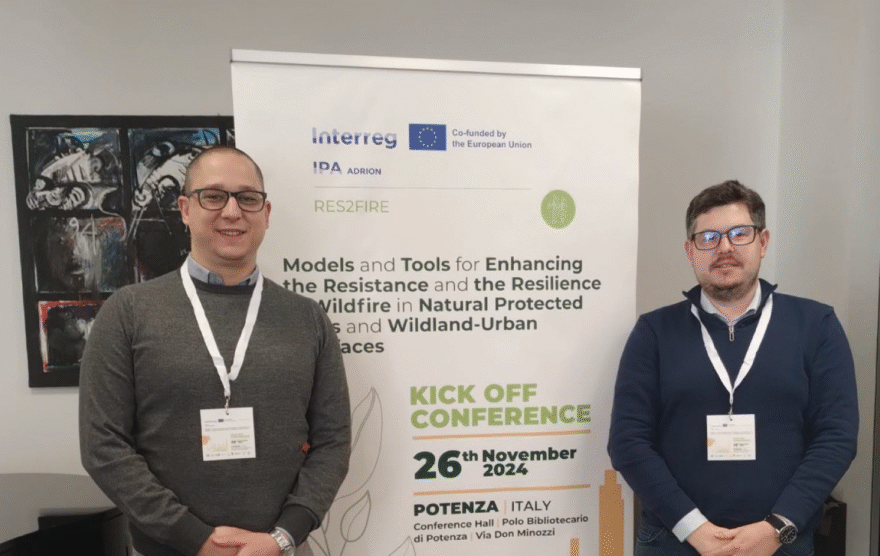
Representatives of the Institute attended a consortium partner meeting of the RES2FIRE, held in Kočani, North Macedonia. The goal of the RES2FIRE project is to develop joint procedures, methodologies and practical solutions for reducing the risk of wildfires and strengthening ecosystem resilience in the Adriatic-Ionian region. The RES2FIRE project is part of the Interreg IPA ADRION 2021–2027 programme, co-financed by the European Union, with a total budget of 1.2 million euros. The project’s focus in the previous period was on the analysis and assessment of fire risk through simulations, as well as the analysis of the effectiveness of measures for reducing combustible material.
Based on the analyses and assessments, it was confirmed that measures such as thinning, undergrowth removal, mechanical treatment and more intensive grazing significantly reduce the intensity and consequences of wildfires.
In the period ahead, the Institute for Development and Innovation will take a leading role in preparing a study on the assessment of the ecological and socio-economic consequences of wildfires in the project’s pilot areas. The aim of the study is to demonstrate the consequences that wildfires have had over the past decade and to highlight the necessity of taking measures to prevent and mitigate their negative effects on the environment and society.
The general conclusion is that technical solutions for preventing and reducing the intensity of wildfires exist, but the key challenge lies in their systemic and long-term application, maintenance and integration into broader natural resource management measures.
The improvement of natural resource management processes, grounded in scientific evidence and best practices, while respecting the local context, represents an example to be aspired to in the creation of public policies.