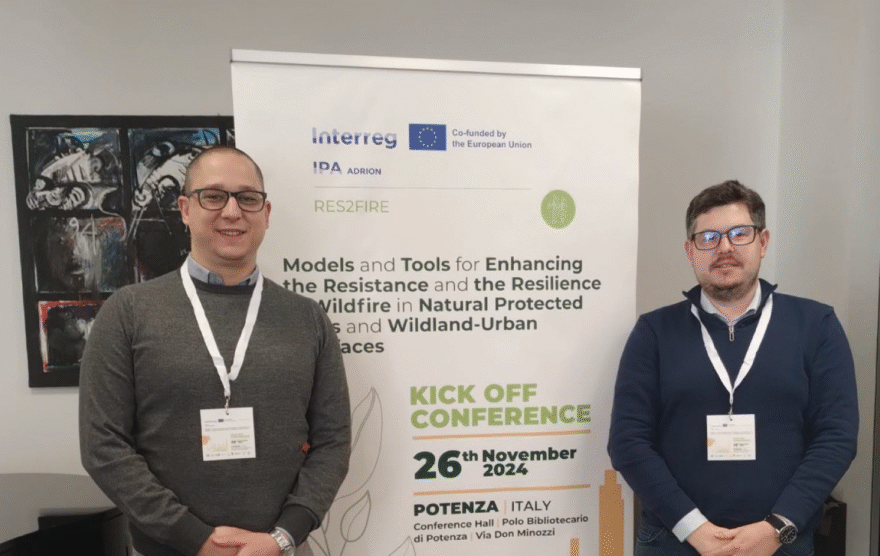
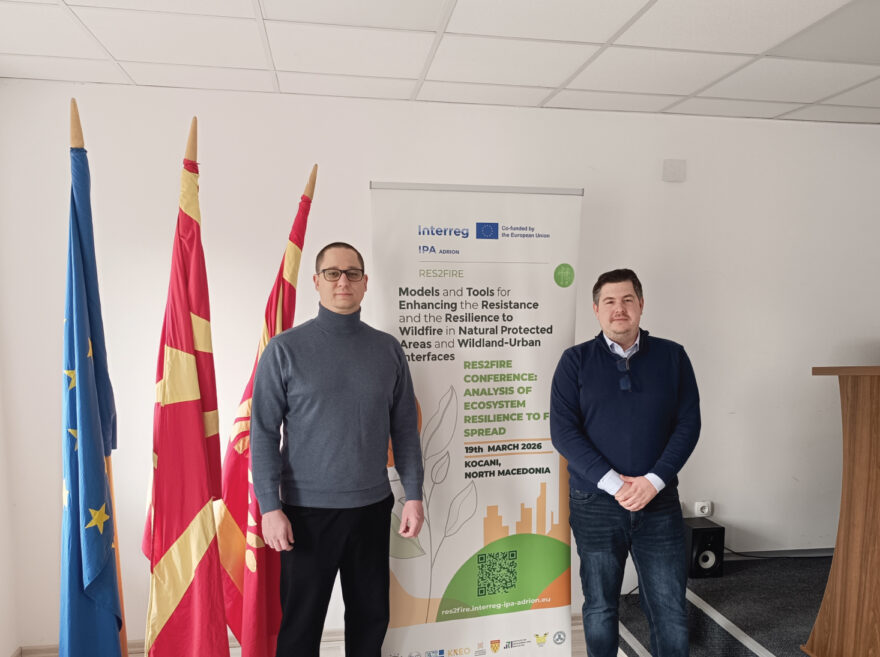
Wildfires are no longer only a natural phenomenon, but are increasingly becoming a social phenomenon as well. Although they are most often presented through the area burned, their consequences are far more complex than this single piece of information. Wildfires as a social phenomenon can also be observed, among other things, through economic costs.
According to Meier et al. (2023), in Southern Europe, from 2011 to 2018, the average reduction in the annual growth rate of gross domestic product (GDP) in regions that experienced at least one wildfire amounted to 0.11–0.18%. For an average wildfire season in Southern Europe, this leads to annual losses of EUR 13 to 21 billion. As Europe is the fastest-warming continent, the impact on GDP will be even greater, resulting in even higher economic losses.
International Conference on Wildfires at the Institute for Development and Innovation
On 4 June 2026, the RES2FIRE international conference dedicated to wildfire prevention and management was held at the Institute for Development and Innovation.
During the conference, European experts discussed risk assessment, early warning systems, public education and strengthening community resilience to increasingly frequent and intense wildfires. The event provided an opportunity to exchange knowledge, experiences and examples of good practice, as well as to strengthen cooperation among partners and experts in this field.
Within the project, special focus has been placed on the assessment of the environmental and socio-economic consequences of wildfires in the pilot areas. The Institute for Development and Innovation, together with its partners, is preparing a study that will contribute to a better understanding of the economic consequences of wildfires in the pilot areas – including damage to natural resources, the local economy, infrastructure and the population.
In the coming period, RES2FIRE project activities will also focus on the development of a webGIS tool to support decision-making in the field of wildfire risk management. The tool will enable the presentation of hazard and risk maps, as well as relevant data for the pilot areas, in order to improve planning, prevention and the reduction of wildfire impacts.
The conference showed that wildfires must be considered through their environmental, social and economic consequences. The exchange of knowledge among experts contributes to better risk assessment, more effective prevention and stronger community resilience, with the aim of minimising the economic consequences for society as a whole.